
- April 28, 2026
When good labs make bad decisions: The hidden human factors behind non-conformances
 NEAS
NEAS
In many laboratories, when something goes wrong, the first instinct is to look for a failure in process.
• Was the procedure unclear?
• Was the training insufficient?
• Was the system not followed?
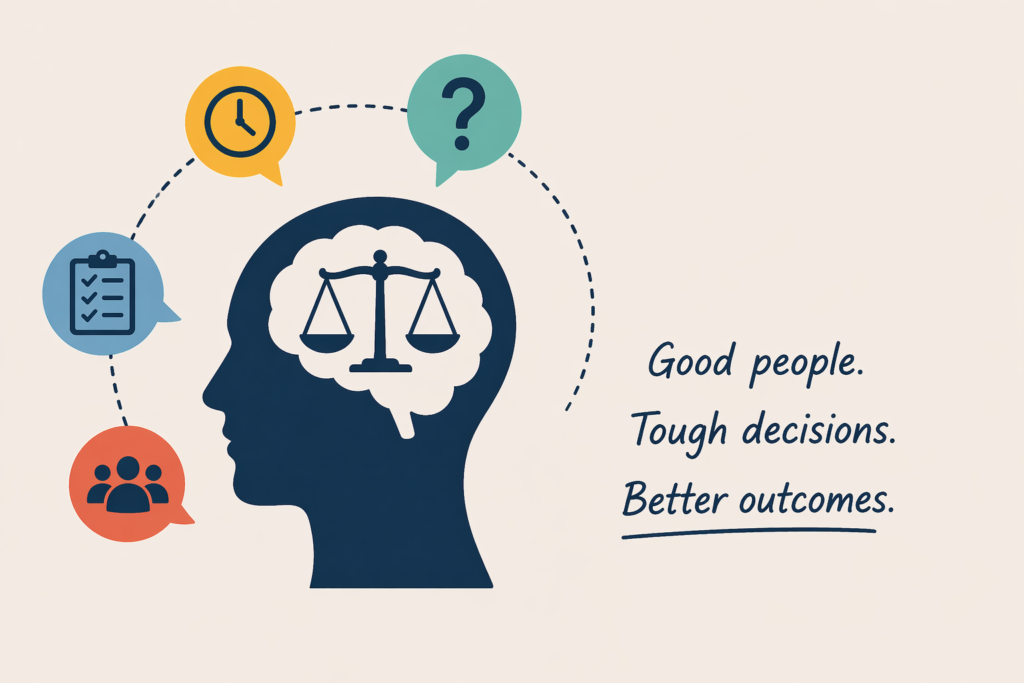
But what if the issue isn’t the system at all? What if the real problem lies in how people make decisions within otherwise well-designed systems?
The uncomfortable truth
Even highly competent, experienced teams working within robust quality systems can make poor decisions.
Not because they lack knowledge or capability, but because of the human factors that influence judgement in real-world environments:
- Time pressure
- Cognitive overload
- Assumptions based on past experience
- Reluctance to escalate
These factors don’t show up in procedures. They don’t appear in audit checklists but they are often at the heart of non-conformances.
The hidden drivers of poor decisions
1. Cognitive overload
Laboratory environments are increasingly complex. Staff are expected to:
- Manage multiple tasks
- Interpret nuanced data
- Navigate systems and documentation
Under pressure, the brain defaults to shortcuts. Important steps may be skipped, not intentionally, but because attention is stretched too thin.
2. Confirmation bias
People naturally look for evidence that supports what they expect to see.
In a testing environment, this can lead to:
- Overlooking anomalies
- Dismissing unexpected results
- Interpreting data to fit prior assumptions
Even experienced staff are not immune, sometimes especially experienced staff.
3. Over-reliance on experience
Experience is valuable—but it can also create risk. Statements like: “We’ve always done it this way” and “I know what this result means” can lead to decisions that bypass formal checks or verification steps.
4. Reluctance to escalate
In many organisations, there is an unspoken hesitation to raise issues:
- Fear of being wrong
- Concern about causing delays
- Assumption that “it’s probably fine”
This can prevent early intervention, allowing small issues to become significant non-conformances.
Where quality systems fall short
Most quality systems are designed to ensure:
- Consistency
- Traceability
- Compliance
But they are not always designed to support decision-making under real-world conditions.
Procedures tell people what to do. They don’t always help people decide:
- When something isn’t quite right
- When to stop and question a result
- When to escalate uncertainty
As a result, audits often identify symptoms, not causes.
Moving beyond compliance: practical steps
Addressing human factors doesn’t require a complete system overhaul. It requires intentional design.
1. Build decision checkpoints into processes
Introduce clear points where staff must pause and consider:
- Does this result make sense?
- Is there anything unusual here?
- Should this be reviewed?
These prompts help counter automatic decision-making.
2. Train for judgement, not just tasks
Traditional training focuses on how to perform a task. Consider incorporating:
- Scenario-based learning
- Case studies of real errors
- Discussions around “what would you do?”
This develops critical thinking, not just procedural compliance.
3. Normalise escalation
Create an environment where raising concerns is expected, not exceptional. This can be supported by:
- Clear escalation pathways
- Leadership modelling the right behaviours
- Reinforcing that speaking up protects quality, not disrupts it
4. Recognise the limits of experience
Encourage a mindset where:
- Experience informs decisions, but doesn’t replace verification
- Questioning is seen as professionalism, not uncertainty
Why this matters for accreditation
Human factors are directly linked to key accreditation principles, including:
- Validity of results
- Competence of personnel
- Impartiality and objectivity
When decision-making is compromised, even subtly, these principles are at risk. Addressing human factors strengthens not just compliance, but confidence in results.
Final thought
Most laboratories don’t have a process problem. They have a decision-making problem hidden inside a process. Recognising and addressing human factors is not about adding complexity; it’s about making systems work the way people actually think and behave. And that’s where real quality improvement begins.
How can we support
At NATA Education & Advisory Services, we work with laboratories to move beyond procedural compliance and strengthen the systems that support real-world decision-making.
Through targeted training and advisory services, we help organisations:
- Embed critical thinking into competence frameworks
- Identify human-factor risks within existing systems
- Build cultures that support quality and accountability
If you’re looking to reduce recurring non-conformances or strengthen decision-making in your organisation, contact our team to explore how we can support you.